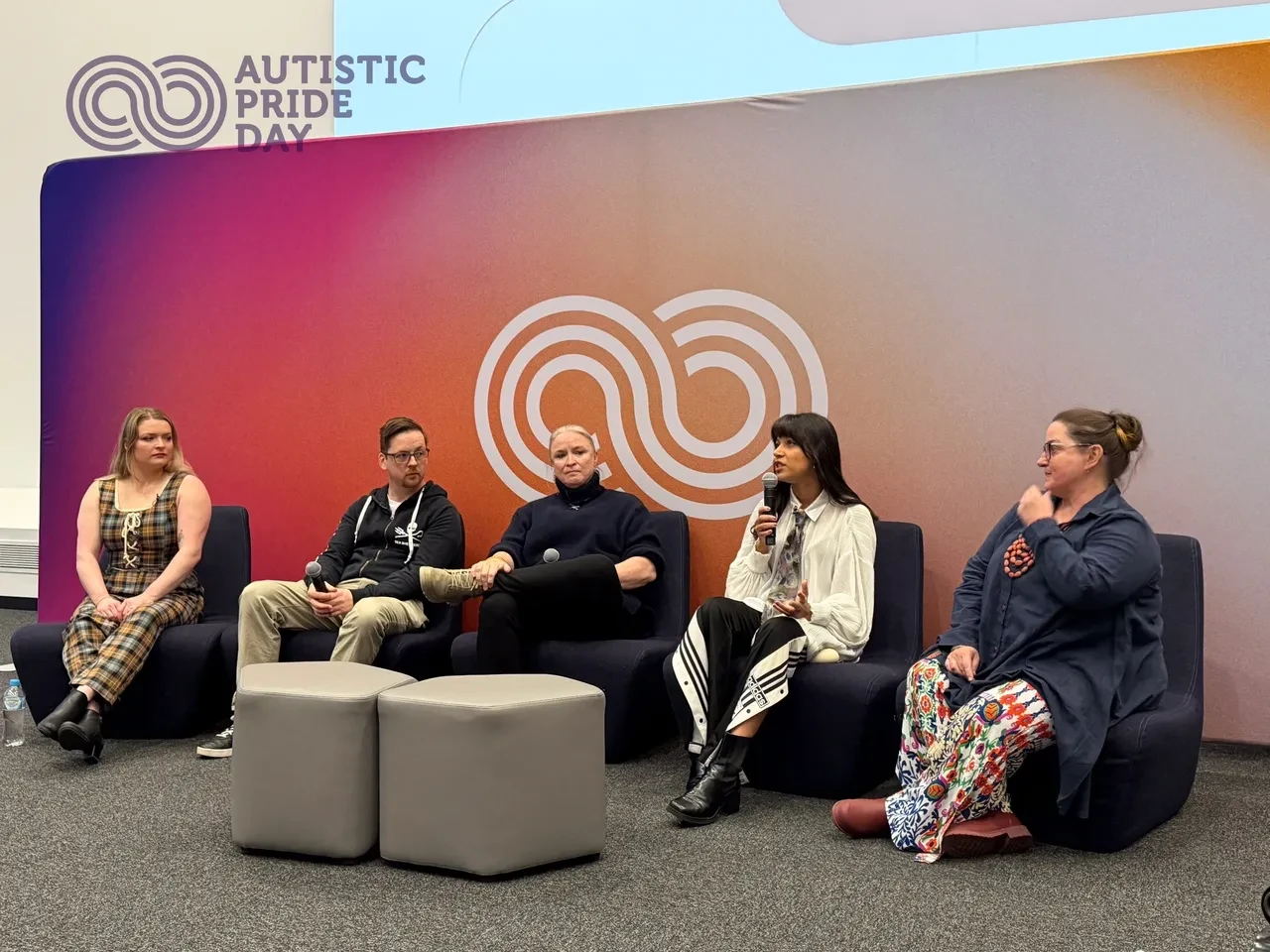
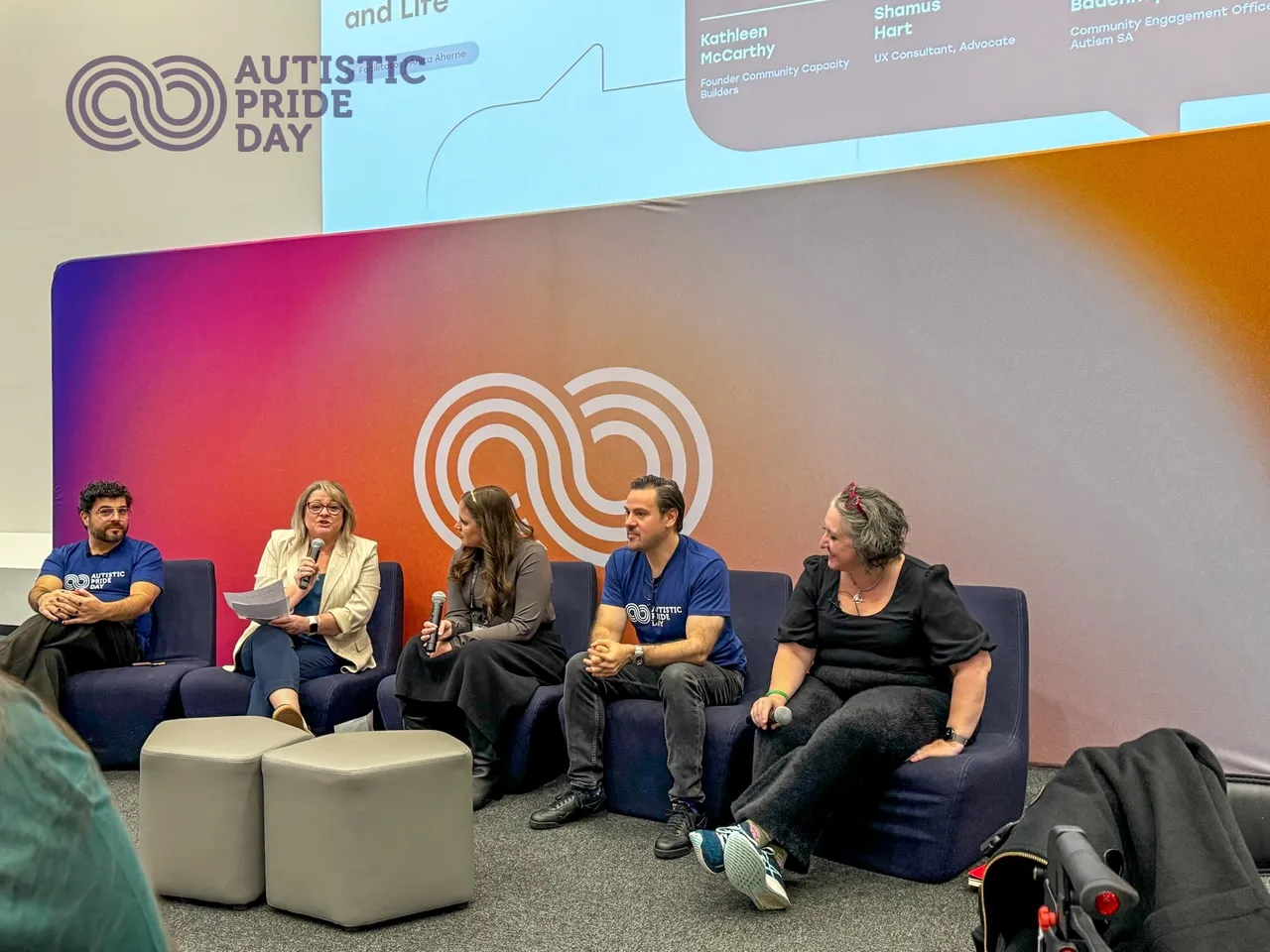
We've run Think Autism four times now and I still can't predict how the day will go. This year a theatre full of autistic advocates, practitioners, entrepreneurs, academics and community members spent the day talking about what's actually working and what isn't. Mostly what isn't.
One thing kept coming back. Autism is everywhere as a word now, but the systems around it have barely shifted. There are lanyards and posters and a rush of social posts every April, and then there's the harder stuff that nobody updates: the policies, the workplaces, the money. Most of the day lived in that gap between what gets said and what actually happens.
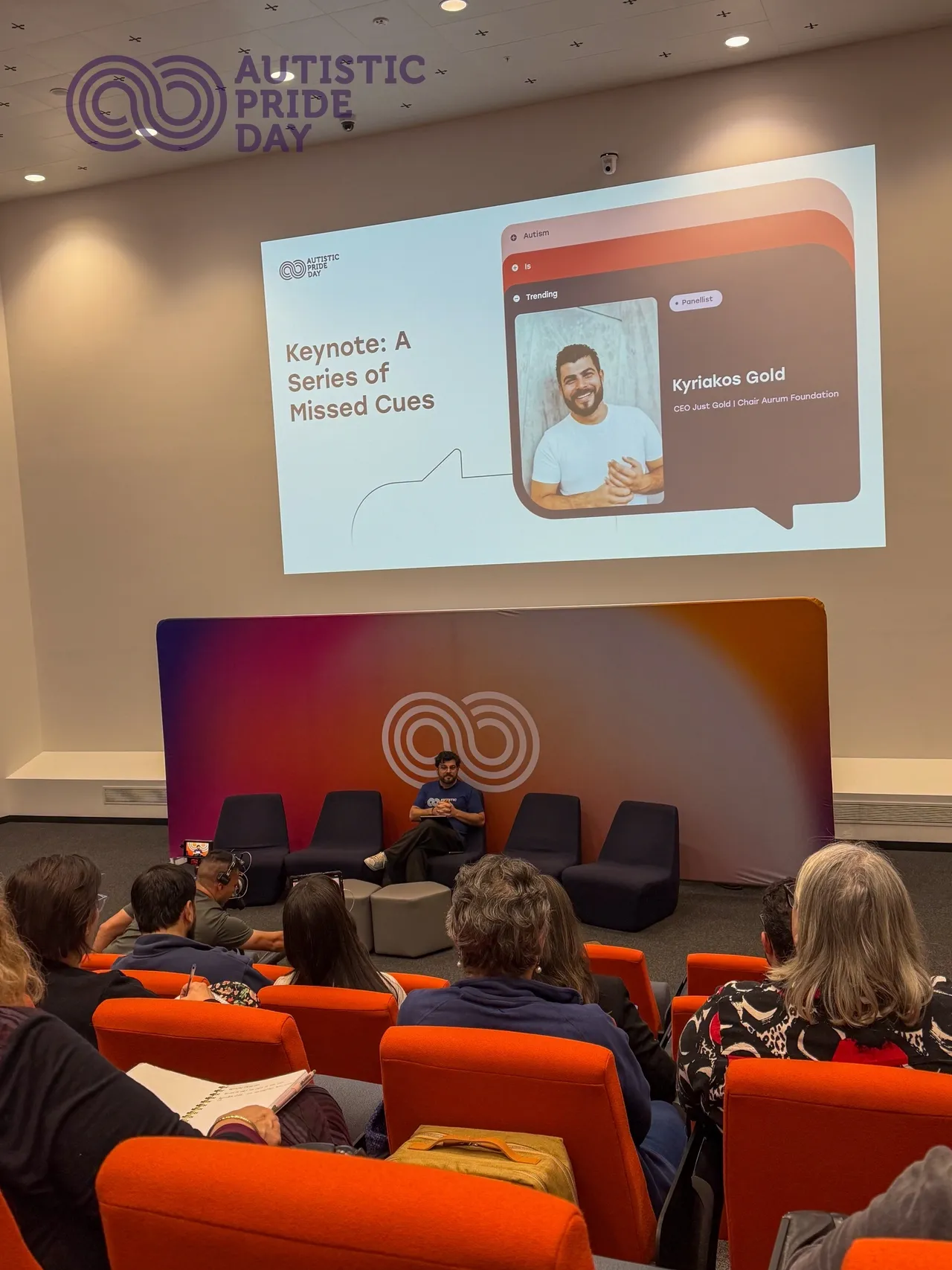
Our founder, Kyriakos Gold, opened with a keynote called "A Series of Missed Cues." He began with an acknowledgement of country, and one line in it set up the whole day: respect to anyone who's ever had to fight for the right to simply be where they already were. From there he talked about cues — the social signals autistic people are forever told they miss — and flipped the idea. The problem isn't really us failing to read the room. It's the world that hasn't learned to read us.
Dr Judy Tang pulled those three words apart — awareness, acceptance, pride — and it stuck with people. Awareness costs nothing. You can be perfectly aware of autism and still cross the street when you see someone stimming. Acceptance usually comes with strings: you can stay, as long as you make eye contact, drop the special interest after a polite minute, and mask well enough that everyone forgets. Pride is the one that asks something of everyone else. It says you can flap and rock and stim and talk about the thing you love for as long as you want, and you belong here because of that, not despite it.
She also pointed out why so many people get missed in the first place. The textbook picture of autism was built mostly on cis Anglo boys. So the girl who alphabetised her bookshelf got called quirky. The teenager who burnt out from masking got called lazy. The woman who finally worked it out at thirty-five got told she couldn't possibly be autistic, because she has friends.
The burnout panel landed hard. Autistic burnout isn't the kind a holiday fixes. The body switches off, and some people don't fully come back from it. So why do so few workplaces deal with it honestly? Liability, mostly. The moment an organisation names burnout, it has to take responsibility for the conditions causing it, so it's easier to leave the whole thing as a private problem for the individual to manage. What you get instead is the performance of inclusion.
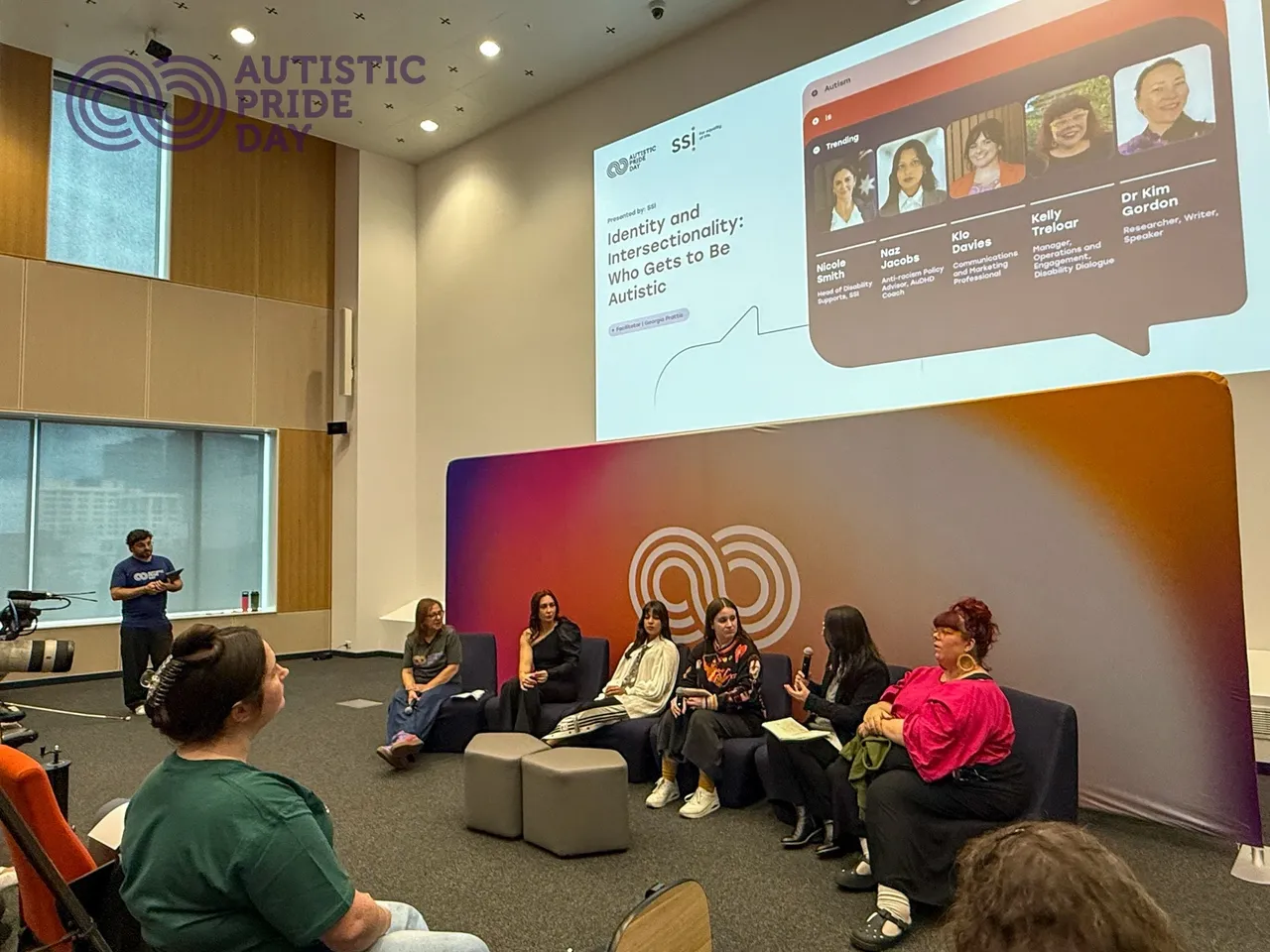
The intersectionality panel went further. Build your idea of autism around one kind of person and whole communities don't just get a worse service, they disappear from the picture. Culturally diverse families, refugees, First Nations people, women, LGBTQIA+ autistic people. One story did the work better than any statistic. A mother arrived from Iran with a young son who's autistic, has a heart condition and complex needs. Over eighteen months she had to apply to the NDIS again and again, because every time her housing changed the process reset. The system assumed she had stable accommodation, fluent English and the digital literacy to navigate it. She had none of that guaranteed, and the people who designed it had clearly never imagined her.
The entrepreneurship sessions were where the optimism lived. The argument was that an autistic-led business is already doing social good, because it shifts how people see autism just by existing and doing well. The catch is that these businesses are close to invisible to government, and the proposed NDIS changes risk pushing them toward a charity model that quietly removes their voice. One figure stuck: with a single venture investor, founders identifying as neurodivergent went from 12.5 per cent of pitches to 25 per cent in a year. The economy is there. It's just succeeding in spite of the system rather than because of it.
The neuroaffirming practice panel made a point worth taking home. The minute affirming practice becomes a fixed list of approved behaviours, separated from why you're doing them, it stops affirming anyone. The real version is relational: showing up, holding space, being honest about who you are, and respecting the person in front of you. As one practitioner put it, policy is talk with no action, and practice is the part you actually live.
By the open floor, the room was naming its own blind spots. Support for neurodivergent parents, and the way trauma gets handed down when they're left to cope alone. Undiagnosed autistic elders, invisible in aged and dementia care, from a generation that was never taught to ask for help. Nobody flinched from any of it, and that willingness to keep widening the circle is most of why the day is worth running.